 ewsba.se
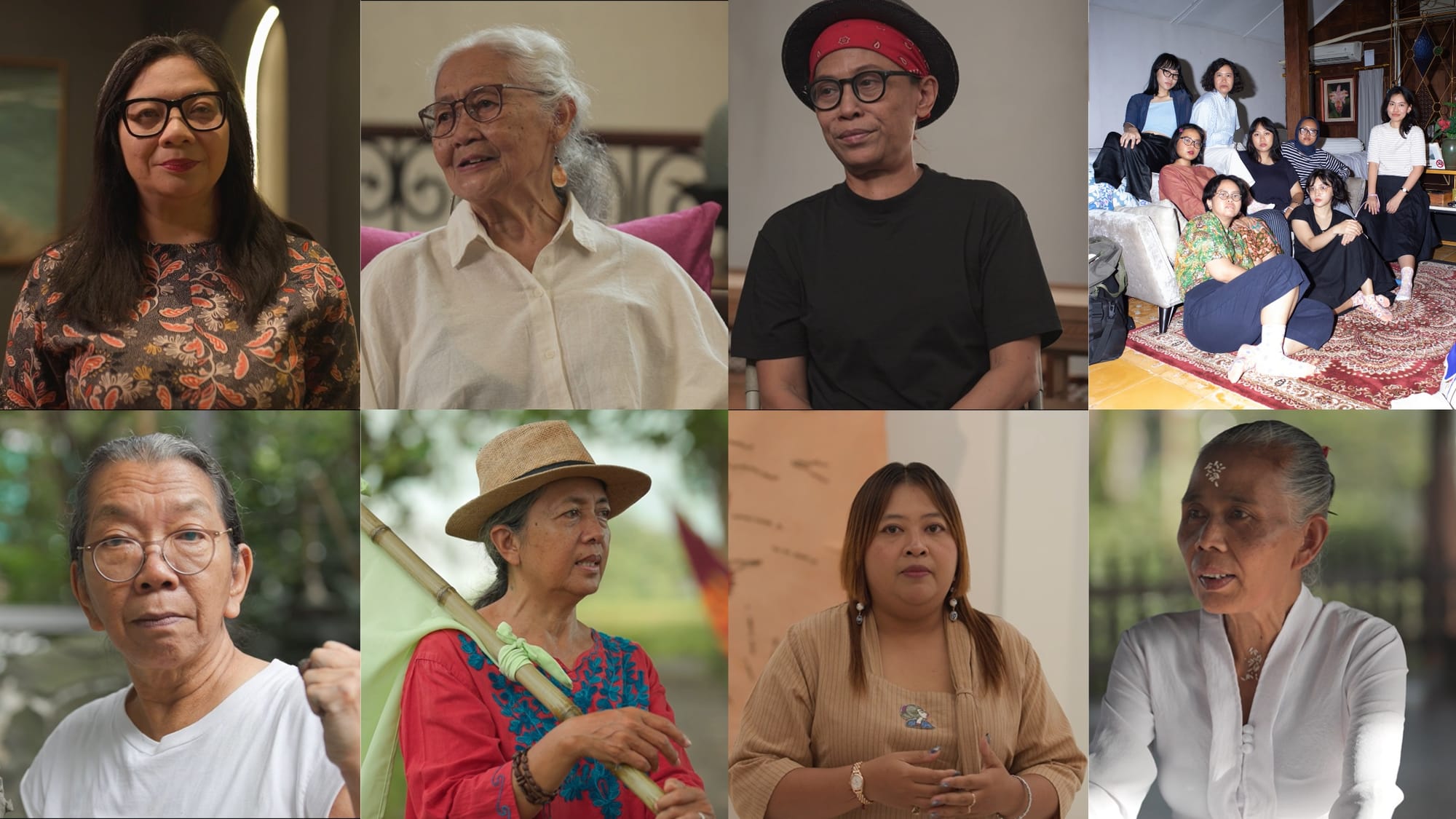
Co-developed by National Gallery Singapore and independent curator Alia Swastika, the course foregrounds women’s contributions to Indonesian art.
How have women artists shaped Indonesia's cultural, social, and artistic histories? National Gallery Singapore's new free online course, Art and Women in Indonesia: Stories that Empower, co-developed with independent curator Alia Swastika, explores this question through the practices and perspectives of leading contemporary artists.
“The absence of women [in historical accounts] does not necessarily indicate a lack of participation.” — Alia Swastika
The course underscores the importance of recovering women’s contributions and bringing overlooked figures and landmark events into view.
Through the work of artists from different generations, regions, and artistic backgrounds, Art and Women in Indonesia highlights a plurality of experiences and perspectives, offering new ways of understanding Indonesia’s histories and their continued resonance in the present.
Structured over five weeks, the course explores the practices of six artists and one collective whose work spans painting, sculpture, installation, performances, and collaborative forms. Together, they illuminate the diverse ways women have contributed to Indonesia’s cultural landscape while engaging questions of memory, power, gender, spirituality, and resistance.
Featured artists include Arahmaiani and Dolorosa Sinaga, whose works confront authoritarianism, censorship, conservatism, and the politics of the female body in public space. Through distinct artistic approaches, they expose the mechanisms through which women’s lives are regulated while fostering critical engagement with urgent social and political issues.
Art and Women in Indonesia: Stories that Empower also examines how Nunung WS, Titarubi, and Bakudapan Food Study Group navigate the relationship between individual experience and collective histories. Through installation, abstraction, and collaborative practices, they explore motherhood, cultural memory, care, and everyday labor as ways of engaging with broader social and political structures.
Drawing on Balinese cosmologies and visual traditions, Citra Sasmita and Mangku Muriati foreground female protagonists and goddesses, reworking inherited narratives and transforming painting into a site for feminist interpretation and historical reflection.
Accompanied by exclusive video interviews, readings, and discussion activities, the course provides deeper insight into the artists’ practices and the contexts from which they emerge. It also invites participants to reconsider the role of women in art history and to reflect on how art shapes the histories we remember, the narratives we inherit, and the futures we imagine.
Art and Women in Indonesia: Stories that Empower is part of National Gallery Singapore’s series of Online Courses on Southeast Asian Art. Join a growing global community of learners in exploring stories of women, art, and social change in and beyond Indonesia.
Register for free at nationalgallery.sg.