 ewsba.se
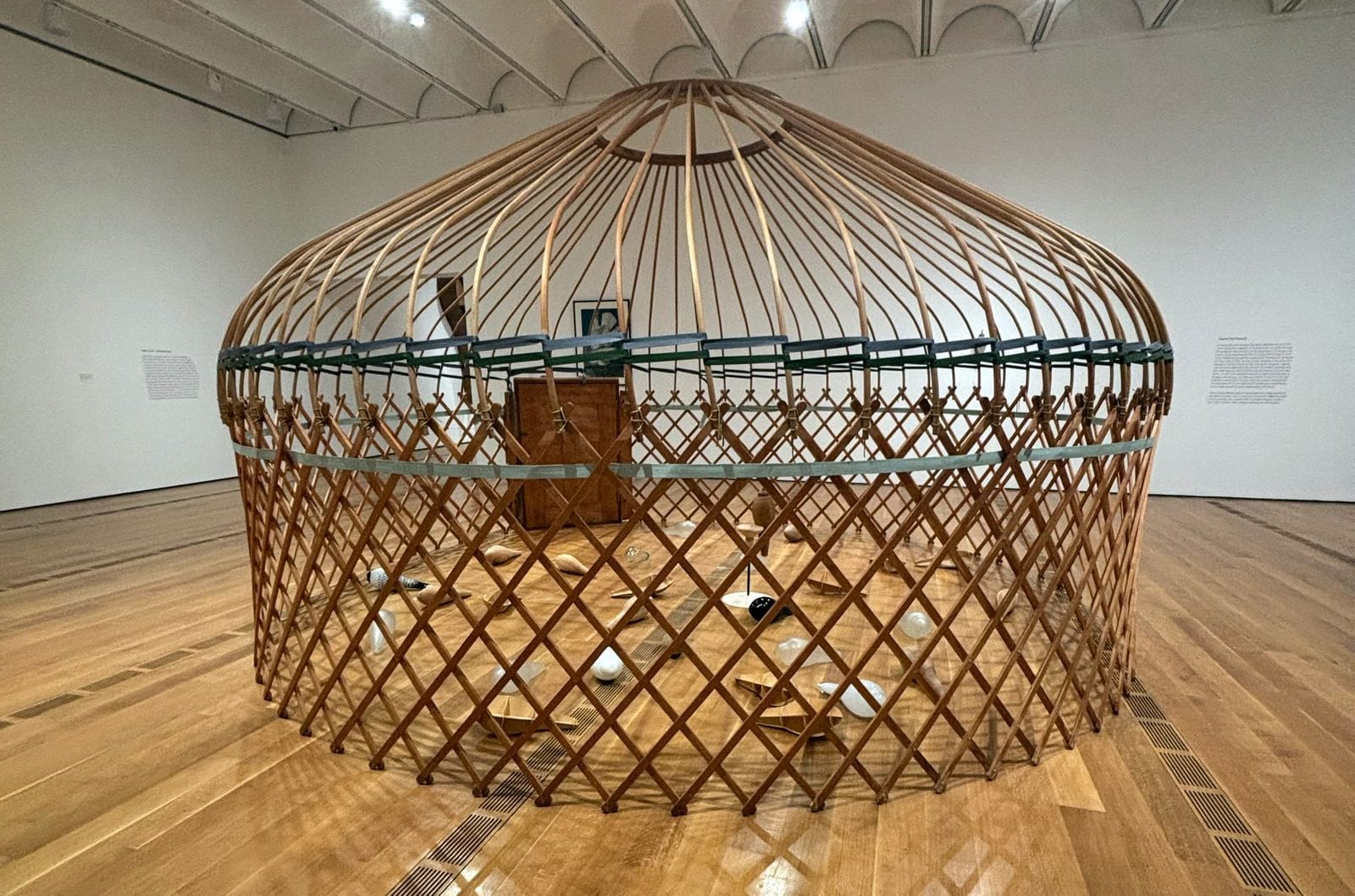
A concern with liberation and revolution runs throughout his exhibition at the High Museum.
ATLANTA — Despite my best efforts to be anything else, I am a writer, and not even the Marines-like insanity of Bard’s interdisciplinary MFA or my day job in the library could erase that from me. Every object instantly becomes a word I see on a perfectly white page, a symbol made up of assorted shapes like “bicycle” (object that carried me from my home to the High Museum of Art) or “press pass” (object that allows me into the High Museum of Art), a compulsion that is always at its worst when viewing sculpture in the page-white tomb of a museum.
I was grateful for that compulsion, however, when I viewed Martin Puryear’s Nexus. Writing, underneath its surface, is extremely violent, exceptionally bloody, and annihilatory in scope. It is almost impossible to describe the reality of this fact on the page, and I have struggled even further to articulate this vocally to others, even other writers. So when walking into Nexus and “Bask” (1976) was there, lying as still and deadly as a knife on its white plinth, I smiled in surprised relief and my body physically relaxed. Puryear is noted for his use of natural materials — wood, rawhide, fiber — and his attention to traditional practices like basket weaving, boatmaking, tanning, and structure building from peoples around the world, which obscures the sculptures’ violence under that tricky word, “natural.”