 ewsba.se
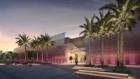
Lighting up the city: the inaugural Frieze Abu Dhabi, which has taken over from the Abu Dhabi Art fair, is at the Manarat Al Saadiyat cultural hub on Saadiyat Island © Department of Culture and Tourism, Abu Dhabi
Frieze Abu Dhabi (19-22 November) debuts next week to a crescendo of cultural development in the emirate. As 2026 draws to a close it brings the launch of the long-awaited Guggenheim Abu Dhabi, which joins three other museums in the Saadiyat Cultural District that have opened in the past 18 months. Meanwhile, the second editions of the Public Art Biennial and Nomad Abu Dhabi art and design fair take place this month, while plans continue for Miza, the creative quarter in Mina Zayed.
While most of Abu Dhabi's cultural projects are newly launched, the city’s art fair has been running under various guises for nearly 20 years. It began in 2007 as ArtParis Abu Dhabi, held first at Emirates Palace, the luxury hotel on the Corniche, before later rebrandeding to Abu Dhabi Art and moving to Manarat Al Saadiyat, where it remains today. In those early years, galleries looked towards the newly announced Saadiyat museum projects. Heavyweights such as Gagosian, White Cube and Hauser & Wirth sold works primarily by Western artists at high prices and with institutional buyers in mind. As acquisition strategies shifted in the 2010s, many of the larger galleries left Abu Dhabi Art and the fair turned towards the Arab region and the Global South.
Frieze Abu Dhabi director Dyala Nusseibeh. “It’s a marriage,” Nusseibeh says about the fair’s partnership with Abu Dhabi’s Department of Culture and Tourism. “And the fair is a celebration—you’re coming to the wedding” Courtesy Frieze Abu Dhabi
Regional stalwarts stayed, among them Green Art Gallery and the Third Line from Dubai, and Elmarsa from Tunisia, and it is thanks to the sustained efforts of the region's scene that art from the Arab world is gaining stature, institutional backing and international recognition. For example, the three artists on the stand of Dubai gallery Lawrie Shabibi—Mandy El-Sayegh, Shaikha Al Mazrou and Hamra Abbas—all now have international profiles. Meanwhile Dala Nasser, the inaugural winner of the Frieze Abu Dhabi Artist Award, arrives fresh from solo shows at Nottingham Contemporary in the UK and Kunsthalle Basel in Switzerland.
This market, nonetheless, has conspicuously lagged. Art from the Arab world remains comparatively underexposed and relatively inexpensive. According to Dyala Nusseibeh, who joined Abu Dhabi Art as director in 2016 and now directs Frieze Abu Dhabi, the UAE accounted for 45% of all buyers of Mena (Middle East and North African) art in 2025. Collecting is rising among the younger Gulf generation, and the number of private collectors in Abu Dhabi has grown over the past decade, among Emiratis and foreign residents alike. Yet most Mena artists still sell to people with a connection to the region, a pattern both Frieze and the emirate are keen to break.
"We got to a point where we’d stretched as far as we could within our existing framework in building the market," Nusseibeh says. “We’re now ready for that next step outward—integrating the local and the regional market far better into the global market."
That step is a "marriage", Nusseibeh says, between the international fair giant and Abu Dhabi’s Department of Culture and Tourism (DCT), which ran Abu Dhabi Art. “The fair is a celebration—you’re coming to the wedding,” she says, framing the arrangement as an evolution of the fair rather than a takeover.
Frieze's chief executive Simon Fox describes the company following a growing market. “Our last new fair was in Seoul, and we just had our fifth edition, which was very successful,” he says. “We’ve been looking at how the art market is evolving, where collectors are, where there is growth. Unsurprisingly, this region is of great interest and becoming more so.”
Frieze’s offer is twofold. First, it promises greater international exposure for galleries and artists from the region, and not only through the curators and collectors it brings to Abu Dhabi. The Third Line, for example, secured a slot at No. 9 Cork Street—Frieze’s year-round London outpost—during Frieze London, on top of its place in Abu Dhabi. Second, the fair offers its regular Western galleries, facing a faltering market, entry to a new collecting cohort.
The Guggenheim Abu Dhabi, scheduled to open on 11 December, is in Abu Dhabi’s Saadiyat Cultural District Courtesy the Guggenheim Abu Dhabi
Despite Fox’s Seoul comparison, Frieze Abu Dhabi represents a different arrangement: it is a partnership with a state entity, behind which lies a web of capital and longstanding business relationships. Frieze was previously owned by Endeavor, the company run by Ari Emanuel. When Endeavor was taken private by the investment firm Silver Lake and its assets bought back in 2025, it was split into three: what Fox calls the “fighting assets”, the Ultimate Fighting Champion (UFC) and World Wrestling Entertainment (WWE), combined as TKO; the talent agency William Morris Endeavor (WME); and the live-events businesses, Frieze among them, under a new company founded by Emanuel called Mari.
Mubadala, one of Abu Dhabi’s sovereign wealth funds, is a key backer of Silver Lake, having put in $2bn in 2020 and signed a 25-year strategic co-operation agreement. Mubadala has also invested directly in Mari, as has the Abu Dhabi media group IMI. That builds on a close relationship dating to the 2010s between Emanuel and Mubadala chief executive Khaldoon Al Mubarak, the brother of DCT director-general Mohamed Khalifa Al Mubarak.
This multifold investment by Abu Dhabi into Frieze should mean the fair is well supported, even as its first edition takes place amid regional instability. In should also ensure Frieze's plans align closely with those for the emirate as a whole. Nonetheless, the decision to not align the opening of Guggenheim Abu Dhabi with the fair will likely mean fewer international visitors for Frieze.
Zayed National Museum opened in December 2025 Courtesy Zayed National Museum
The arrival of Frieze, and the rest of Emanuel's portfolio, chimes with Abu Dhabi’s embrace of luxury and high-end events—which is, of course, another way to describe an art fair. Mari's holdings include elite tennis, such as the Mubadala Abu Dhabi Open. The sovereign wealth fund ADQ’s $1bn investment in Sotheby’s in 2024 has produced a second year of auctions at the five-star St Regis hotel, where the auction house is selling jewellery as well as art. Next door to Manarat Al Saadiyat, the fair’s venue, sits not only the museums but the luxury Saadiyat Grove Mall, where its developer, Aldar, also chaired by Mohamed Khalifa Al Mubarak, has commissioned major works by serious artists. Emanuel has often called this the entertainment and experience ecosystem: a synergistic portfolio spanning live events, luxury and leisure.
How measurably this will touch the fair itself remains to be seen. When Endeavor, then WME-IMG, took a stake in Frieze in 2016, pundits predicted crossovers between celebrities and artists that never materialised, and WME was later reconfigured as a separate entity. Frieze maintains that it retains full creative control, although with input from DCT, and has no plans to alter the art-centred formula that has served it well.
The luxury connection matters less for the fair than for what it reveals about Abu Dhabi’s positioning as a city for global elites. The private-equity and investment firms that have been arriving at pace until Iran's missile strikes on the Gulf earlier this year tell the same story. As does the commitment to an event-driven lifestyle, with calendar points throughout the year that drive business to the emirate. This week, Frieze; next month, the Abu Dhabi Grand Prix, Abu Dhabi Collectors’ Week and Guggenheim Abu Dhabi.
Stepping back, Frieze Abu Dhabi represents one part of a longer, grander plan for the emirate. Accordingly, its success will be measured not only in sales, but whether the artists at its heart will eventually launch onto the global stage. The Guggenheim's arrival is expected to further propel Abu Dhabi's efforts to canonise not only the UAE’s contemporary scene, but also the history of Arab Modernism, which unfolded largely further west in the Maghreb, Egypt, Lebanon, Syria and Iraq.
The fair’s geography has also widened since its early editions, most notably with the growing importance of South Asian artists and collectors. Some of the most successful stands in recent years at Abu Dhabi Art have come from the subcontinent, and Frieze boasts a significant South Asian contingent, including Experimenter, Galerie Isa, Jhaveri Contemporary, Nature Morte and Project 88. South Asia shapes the non-commercial programme too: the curator Tarini Malik anchors her section, Global Futures, in the Arabian Sea, which connects South Asia and the Arabian Peninsula, and positions Abu Dhabi at the heart of a re-ordered world.