 ewsba.se
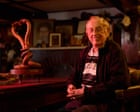
My Uncle Teddy was born 90 years ago into a long line of whip-cracking sideshow folk – his grandmother used to dangle people in the air by her teeth. From contortionists and knife-throwers to a double-jointed horse, he recalls the magic of the showgrounds’ heyday
My uncle Teddy Trevor remembers Casey Nelson, a fellow showman, spruiking his double-jointed horse to sideshow punters in the 1960s. The horse, Nelson warned, was “showing here for the last time”. “Too late, too late will be the cry, when Happy Harry has passed you by,” he called. The act continued for another two decades.
The Casey Nelson tent show, featuring Happy Harry the double-jointed horse, circa the late 1940s
I’ve been hearing stories like this my whole life. Ted laughs at Casey’s line as he pours another cup of tea and passes the biscuits at the kitchen table of the family home in Brisbane. At 91, after a lifetime in Australia’s travelling shows, he has no desire to quit the showgrounds yet. While their mid-century heyday may have passed, these grounds are still the lifeblood of his friendships and family.
Ted feels blessed, he says, to belong to two great show families: the Trevors, circus people on his father’s side, and the Fosters, sideshow people on his mother’s. Born on the showgrounds in 1935, he comes from more than eight generations of show folk.
Ted in his kitchen with his cockatiel, Sweetie Pie
Ted’s grandmother Cora Trevor performed an iron-jaw act, hanging upside-down and spinning grown men by her teeth, including her 14-stone (88kg) acrobat father. My great-grandmother Alice Foster, known as LuLu, arrived in Australia in 1913. She was a widow with six sons and a daughter. Lulu kept her whole family fed while running a dancing duck as a sideshow act.
Clockwise from top left: Ted Trevor aged five; Cora Trevor Williams, Ted’s grandmother, performing an ‘iron-jaw’ act; Billy and Vera (left), who performed trapeze and iron-jaw acts, and Ted’s grandmother, Cora (right); Ted’s mother, Frances ‘Girly’ Foster, on stilts on Pitt Street, Sydney
Uncle Teddy’s own entry into work coincided with the second world war, which brought the showgrounds to a halt. He started his career selling fabric door to door from my grandmother’s vardo caravan. As a young man in the 1950s, he worked with my uncle Frank Foster, promoting Slim Dusty’s tent show on the sideshow alley. Those days were hectic. “You start at nine in the morning, you don’t finish till after 11 at night, and you do a show every 20 minutes,” Ted tells me.
“The show was a big event for the town,” Ted says – the biggest day of the year for some places. The men wore suits, hats and ties, the women their best dresses. “Now they go in a pair of shorts and thongs,” he says.
‘The reason they call it the old-time showman is because that’s exactly what it was. You had to be a showman to work with whatever you got’
Teddy says the atmosphere of the sideshow was what everyone came to the show for. He can still recite the lines they used to entice the crowds: “The Slim Dusty show is just about to start! Australia’s top country-and-western recording star, the only Australian to top the hit parade in England, our only gold record-holder, is on this next big program. Hurry boys, hurry girls, get your tickets now! The cowboys, the cowgirls, the knife-throwers, the jugglers, you’ll see and meet them all on the inside.”
Uncle Teddy says that between the advent of TV, RSL clubs offering sideshow talent a new touring strategy, and state-based showground permits hindering showpeople from pivoting beyond the scope of their trade (for example, a clown joint can only do clown business), the landscape of the showgrounds drastically changed in the early 1970s.
Frances Foster with Slim Dusty at the Brisbane Exhibition in the early 1960s
Performers could sing half a dozen songs at an RSL, Ted tells me, “for what three or four days and hundreds of songs paid them on a sideshow”.
Participator numbers also declined, while costs climbed, he says. The big rides came in, worth millions. “The showgrounds are saturated with equipment now,” he says. “There’s no more ground available, so there’s no permits for the young showman.”
The cost escalated, too. “They’re charging $12 for a game on the clown joint. It’s all ridiculous,” he says. In Ted’s day, it used to be “only four bob [40 cents] to go and see the show”. Some shows were three shillings, and a shilling for a child. As he puts it: “The money was sort of nothing.”
Ted in his pool room, where all his favourite photographs are on display
In the last couple of years, I had seen Uncle Teddy posting diary-like entries on Facebook, sharing his memories along with photographs It led me to ask him some more questions.
Uncle Teddy often says: “I’m sorry you were born a bit late to see the action.” It’s clear he thinks I’d have loved it. He describes the camaraderie of the sideshow community, with everyone pitching in when they were needed. “Everyone’s got to do their own thing,” he says. “The stars have got to get out in the middle of the night and knock pegs in if a storm’s coming up.”
From left: Shayne Brophy, who was born and bred on the showgrounds, performing a trapeze act. She also did contortions, whip-cracking, wire-walking, and worked in the snake pit; Jan Foster in a knife act in the Foster’s big tent show in the late 1960s. Johnny Foster’s son Pikey was the one throwing the knives, and no one dared to be the target except Jan, his wife. Over many years and thousands of knives thrown, the worst she suffered was one small nick to the ear; Ted’s twin daughters, Sonia and Tracy Trevor, working on their Knock ’Em Can joint in the early 1980s
“I always loved the showgrounds because of the people,” Ted says. My cousins still travel the showground runs, working joints, food trucks and rides. The skills of a modern showman are totally different from the past.
“Today you buy a $2m ride and you don’t have to be a showman,” he says. “People either like the ride or they don’t. It’s just got to be a spectacular ride, a thrill ride, and they’ll queue up and go on it … it’s a different ballgame.[Showpeople] don’t have to get up and tell a tale. They just say, ‘Next ride, hurry now, get your tickets for the next big ride,’ and that’s it.”
These days, Uncle Teddy visits his friends and family at the Beenleigh or Brisbane shows, and chats on the phone to his friends across Australia. “You get friends in different towns. You meet their kids, and when you get old, you meet their grandchildren, and they all become like family.”
I take my own child to the Royal Easter Show when it’s on in Sydney, and the moment I spot a laughing-clown joint, I half expect to see Uncle Teddy come around the corner, his eyes sparkling, a joke on his lips and coins jingling in his waist pouch. I tell them the stories Ted told me, alive with dancing ducks and my iron-jawed great-grandmother. Their eyes widen the way mine did at Ted’s kitchen table, and the show rolls on to another generation.