 ewsba.se
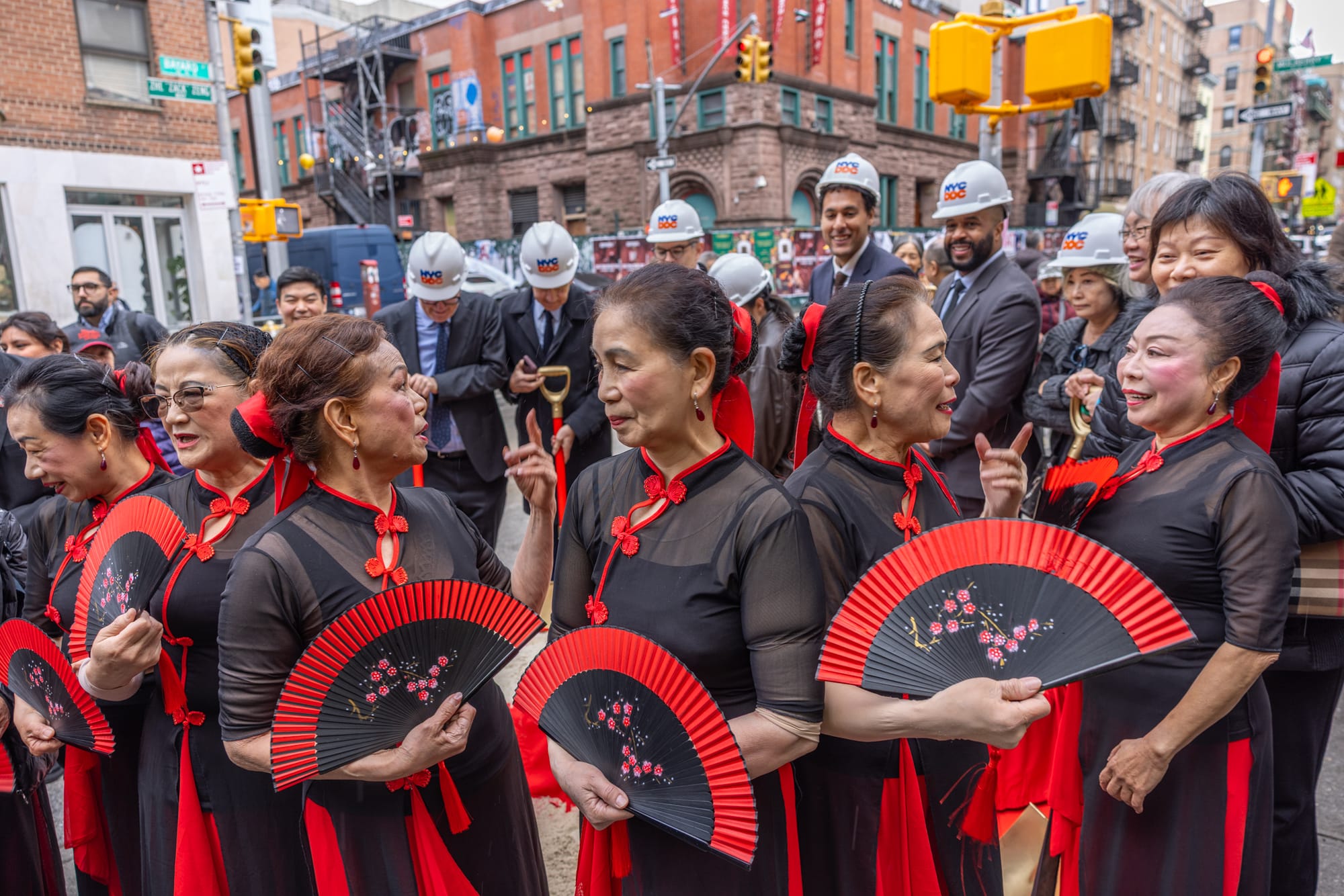
Some $184 million will go toward the revival of 70 Mulberry Street, which once housed community-based organizations.
On Monday, November 9, New York City Mayor Zohran Mamdani, along with the commissioners for the departments of design and construction, citywide administrative services, and cultural affairs, commenced the $184 million reconstruction project of 70 Mulberry Street, a historically significant building that sustained severe damage from a fire in 2020.
Upon the project's expected completion in 2030, 70 Mulberry Street will house or provide additional space for the five community organizations that operated there before the fire, including the Museum of Chinese in America (MOCA). The new building will include artist Jennifer Wen Ma's "Wings of Everchange 易之翼," a permanent, three-part art installation commissioned by the Department of Cultural Affairs’ (DCLA) Percent for Art program.
Working between Beijing and New York City, Ma has produced varied interdisciplinary media ranging from "cleansing walks," which appear like one-person funerary processions, to collections of plants coated in Chinese ink.
Designed by Grimshaw Architects, the new building retains architectural traces of the 1892 building, while expanding to include six community rooms, multipurpose areas, outdoor spaces, and several modern accommodations. The renovated building is expected to provide approximately 30% more public space than the original facility and will extend three floors higher.
Founded and constructed in 1892 as Public School 23, the building was repurposed into a community hub in the mid-1970s. After the fire devastated much of the building's structure in 2020, the five organizations operating there relocated to nearby venues. While MOCA had moved to its 215 Centre Street flagship in 2009, it retained the old gallery space at 70 Mulberry Street as an archival space and research library for the museum's 85,000-item collection, most of which was salvaged from the fire.
Since accepting a $35 million city capital grant tied to the construction of a Chinatown jail in 2019, MOCA has come under intense scrutiny. In July, protesters condemned museum leaders for accepting the so-called "jail money" in exchange for their complicity in the jail's construction and the possible devastation to Chinatown's communities.
Ma's public installation touches upon much of the Mulberry Street site's historical record and its role in Chinatown in three capacities.
The central sculpture in the building's atrium will be modeled after the graceful brushstrokes of Chinese calligraphy and incorporates salvaged materials from the 2020 fire. Within the sculpture, glass orbs serve as time capsules dedicated to certain individuals or groups touched by 70 Mulberry Street. Ma also plans to launch a publicly accessible website and app with oral testimonies from 70 community members about the building. The third part of the installation extends to the historic spiral stairwell, where ink paintings on glass panels snake up several floors along the inner stair tower.
The New York City Public Design Commission unanimously approved Ma's design in January 2024 as part of the Percent for Art program, which mandates that 1% of eligible funds for city-backed construction projects be spent on public artworks.
"Our community has gone through so many challenges and changes," Ma said in a statement. "I set out to make a work that would embrace these changes, honoring our history, anchoring us in the present and taking us soaring into the future.”