 ewsba.se
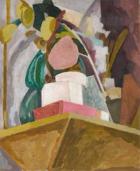
The Bloomsbury Group seems to have been ever-present in UK culture since its inception in the early 20th century, just before the First World War. Lytton Strachey, John Maynard Keynes, Virginia Woolf, E.M. Forster, Vanessa Bell, Duncan Grant—their names are legion as representatives of a flowering of British intellectualism across the full spectrum of literary and artistic endeavours. While Roger Fry was arguably Bloomsbury’s most influential art-world voice, as the critic who essentially introduced European Post-Impressionism to Britain with a celebrated exhibition at the Grafton Galleries in 1910, Bell and Grant were the group’s most active and high-profile painters. The pair’s bracketing together for a new Tate Britain exhibition is also a result, no doubt, of their 40-year open relationship that saw them live and paint together—and each other—over many decades.
The Bloomsbury Group has largely retained its high profile over the decades, with feature films on many of its protagonists and even a BBC mini-series in 2015 called Life in Squares, named for the supposed Dorothy Parker gag that the group “lived in squares, painted in circles and loved in triangles”. Bell and Grant’s former home Charleston, near Lewes in East Sussex, has maintained a near-constant programme of exhibitions to keep the flame alive, the latest of which, Mad Bloomsbury (4 November-11 April 2027) examines the group’s engagement with mental health issues.
But the Tate show marks the first Bloomsbury-focused show at the national home for British art for over a quarter of a century. Thomas Kennedy, the curator of Modern British art at Tate Britain, thinks it is about time. “That means an entire generation of visitors have not seen an exhibition on Vanessa or Duncan’s work at Tate, and we felt that it was important for us to revisit their practices again after so long,” Kennedy says. “I don’t believe there’s ever been a major exhibition on Vanessa and Duncan together, and it’s so fascinating to see the ways they differ. We should recognise their individual accomplishments of course, but also the works they made together and how they influenced each other. We know about their relationship—she was married and he was gay—but this exhibition explores what that really meant in their artworks and in their life.”
Looking back at that previous 1999 show, the cuttings files reveal that the turn of the millennium clearly marked a low point in critical opinion of the Bloomsbury artists; outright abuse might be the best description of some of the responses. The Guardian art critic Adrian Searle called them “a bit crap”, “lightweights” and “third rate”, while for the novelist Philip Hensher writing in The Independent, these “no-hopers” and their “rubbish” inspired simple “rage and loathing”.
But Kennedy is not having it. Bell and Grant, he says, “started experimenting with art in unique ways that hadn’t really been seen in Britain before”. He adds: “They created some of the first abstract works in Britain, which is sometimes very much overlooked. And they were creating these works together, and talking about art all day, every day, breaking the distinction between fine and decorative art with the Omega Workshops. What they were doing was really special.”
Bell, whose sister Virginia Woolf was even more celebrated in her field, is perhaps now the slightly more recognisable name of the two painters, though, as Kennedy points out, both Bell and Grant were considered leading figures during their lifetimes. Their close physical proximity, from when they moved to Charleston in 1918 to Bell’s death in 1961, meant their styles were often similarly adjacent, though Kennedy is clear on the differences. “Vanessa’s painting is more deliberate with very considered blocks of colour and very strong outlines, whereas Duncan’s is scratchier, more impulsive and it feels like he is experimenting more with more expressive techniques,” he says.
Kennedy adds: “However, later on, when they’re working on the Famous Women dinner service [a collection of 50 hand-painted plates], their styles are completely the same: the authorship has very much broken down and we can’t tell who did what. So much so that Roger Fry told them to paint in different studios to reassess their own way of making. It’s fascinating to see that push and pull between what they were taking from each other.”
In the end, it might be that the very thing that seemed to diminish the Bloomsbury Group for previous generations—their complex, near-incestuous love lives—is what is powering their current revival: to contemporary perspectives they now look like pioneers of unrepentantly queer lifestyles. Bell married fellow painter Clive Bell in 1907, then had a long relationship with Fry and had a daughter, Angelica, with Grant in 1918. Grant, for his part, had a string of male lovers while maintaining his domestic relationship with Bell. “They were looking towards non-monogamous relationships and accepting queer relationships. The latter, as you know, was illegal in the UK at the time,” Kennedy says. “Within the Bloomsbury Group they felt freedom—both artistically and the way they lived.”
• Vanessa Bell & Duncan Grant: Inside Bloomsbury, Tate Britain, London, 12 November-11 April 2027