 ewsba.se
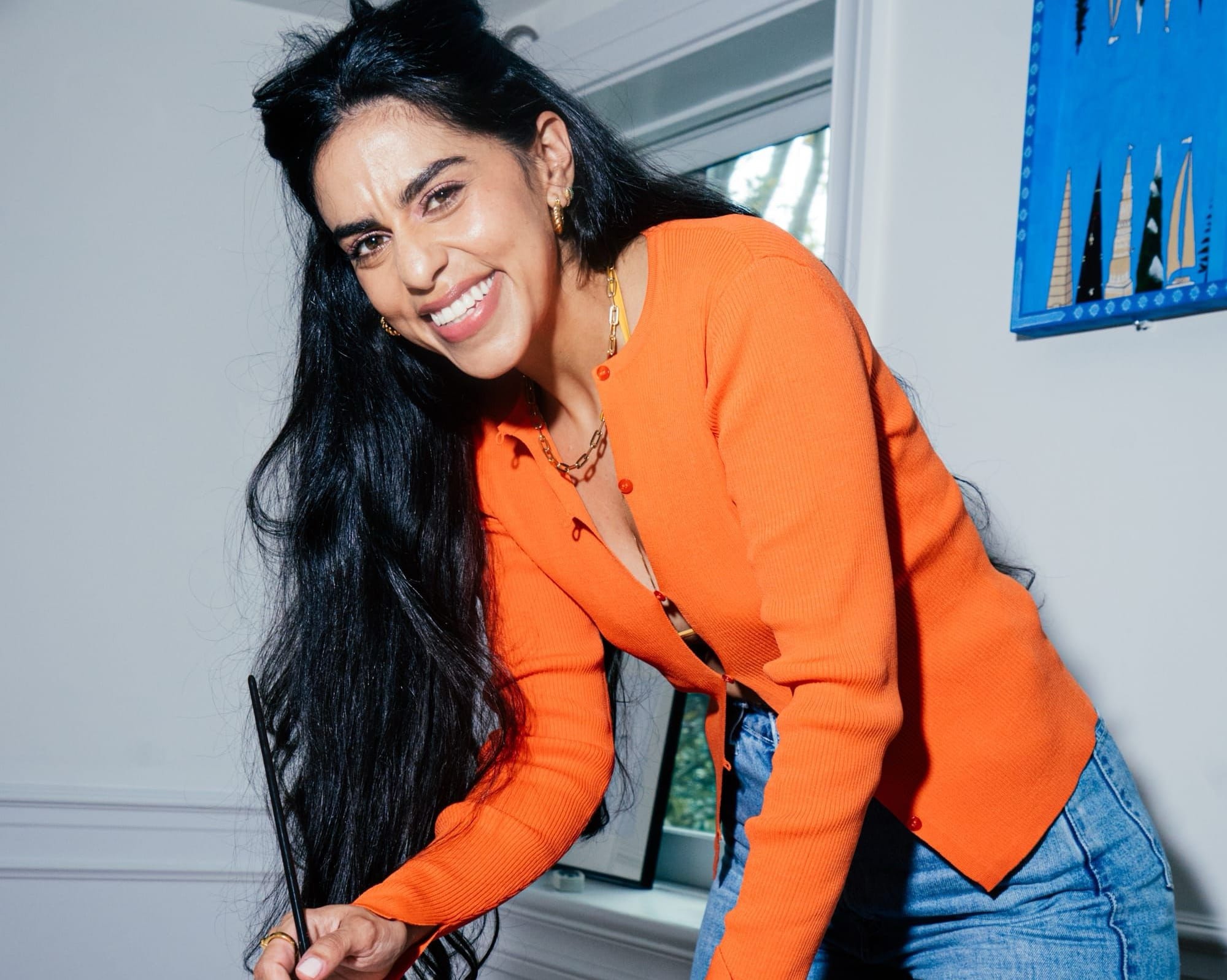
“The crisis is the system that we’re in,” the Pulitzer Prize-winning data journalist and artist says in an interview with Hyperallegic about her first book, “Ten Lives.”
“As an adult and as a journalist, I have stared shamelessly.” That refusal to look away is precisely what data journalist, writer, and artist Mona Chalabi has built her deeply principled career on. Known best for her indelible data visualizations, from the obscenity of Jeff Bezos’s wealth to the Israeli government’s starvation of Palestinians in Gaza and the racial and gender biases in museum collections, the Pulitzer Prize-winning Iraqi-British journalist tackles the subject of wealth and economic inequality in America in her first book, Ten Lives: How What We Have Shapes Who We Are (2026).
When I met her in the West Village in September, she’d just come from recording its accompanying audiobook, a delicate process given the visuals on its pages. Chalabi organized meticulous interviews conducted with anonymous subjects across income levels over the course of six years into 10 vividly fleshed-out characters. Each represents a particular economic class, illustrated in her signature hand-drawn style and punctuated by reflections on her own financial struggles as a young journalist and, more recently, in the wake of her mother’s illness. Chalabi carries a long tradition of data visualization — W.E.B. Du Bois’s The Exhibit of American Negroes comes to mind — into her refreshing candor about class and the stifling silence around it, particularly in journalism and the art world.
That insistence on specificity and honesty in her reporting goes hand-in-hand with her political advocacy; Chalabi donated her $15,000 Pulitzer Prize award to the Palestinian Journalists Syndicate and has been fighting for Palestinian rights since she was a teenager. Her drive to seek out and represent truth, in Ten Lives and in her social media posts, is anchored in a sensitivity and profound sense of responsibility. In this way, she restores some of the humanity and dignity to the statistics that capture the brutality of genocide, exploitation, and economic inequality, one brushstroke at a time. In an interview, we spoke about the financial realities of journalism, the value of collaboration in an era of isolation, and the art and literature that sustains her. Our conversation has been lightly edited for clarity and length.
Hyperallergic: In the intro to Ten Lives, you recall getting scolded for not observing “the etiquette of looking away” as a child. And it’s so striking that you have made a career of doing the opposite. How did you decide to make class, something we’re taught to overlook from a young age, the subject of this book?
Mona Chalabi: The first line of the original manuscript said, “I wrote this book because I was paid a shitload of money to write it.”
MC: And my editor was like, “Yeah, you can't do that. No one's gonna want to read a book that you wrote simply for money.” But I also knew that this was a commercial idea, and that did inform it. I have been quite shameless about the fact that I want my work to reach a wide audience. That has always, always mattered to me. It was the beginning of the pandemic, and part of the way that I pitched it was this idea that there's gonna be a big financial crisis and the dynamics are more nuanced than simply talking about the one percent. There's this idea of a coming economic collapse or a coming financial crisis. But as soon as we're in it, it's not this cyclical model. The crisis is the system that we're in that is so broken.
H: That gradation of class that usually doesn't get talked about is such a crucial contribution of this book. What led you to stratify these stories based on subcategories that often just get collapsed into “working class, middle class, upper class”?
MC: Class is really informative about who I am and how I move through the world and my relationships. And I felt like it was really, really lacking in our discourse. I feel a bit hesitant to use the word “discourse,” but it's just true. And it's not just about discourse, it's more mundane than that. It's the way that someone like me can say, “I'm an Arab, cis, heterosexual woman,” with total ease, but class doesn't really come into it. There's a dishonesty there. Actually, class is really, really important. And many of us aren't really talking about that in accurate and fruitful ways.