 ewsba.se
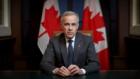
Canadian Prime Minister Mark Carney Photo courtesy Prime Minister of Canada, via Wikimedia Commons
The proposed budget Canada’s Liberal government released on 5 November offers the country’s artists a lifeline, recommending new tax measures and funding channels. In a post on X, shortly after finance minister François-Philippe Champagne tabled the budget, the Prime Minister Mark Carney wrote that “if you’re a Canadian artist, you won’t pay tax on up to $45,000” ($31,800) of income from their creative work.
Much remains unknown about how this tax exemption and other measures would be implemented. The budget released last week only proposes a tax credit and the federal government has yet to set its cost, start date or eligibility rules. Ottawa says its planned consultations with Canadians and the cultural sector will be announced in the spring 2027 economic update.
The proposed budget also includes C$783.1m ($554m) over five years going toward the National Arts Centre, Library and Archives Canada, the National Battlefields Commission and national museums, according to The Canadian Press. It also promises free entry to national museums for visitors under age 25, funded through a subsidy of C$46.3m ($32.8m) over five years, then C$11.5m ($8.1m) per year. The budget also calls for increasing funding to the Canada Council for the Arts with a new investment of C$20m ($14.1m) over three years.
“This funding falls far short of what is actually needed: permanent, stable funding at a scale that enables impactful support for Canadian artists and institutions,” Jenna Faye Powell, the interim national executive director of Carfac (Canadian Artists’ Representation/Le Front des Artistes Canadiens), tells The Art Newspaper.
In addition to funding boosts and tax breaks for artists, the budget reiterates support for the long-promised adoption of artist’s resale rights in Canada, which would provide artists with royalties from secondary-market sales of their work. In the 2025 Budget, the government announced its intent to amend the Copyright Act to create an artist’s resale right in Canada, but the legislation never materialised.
Adopting an artist’s resale right “would provide creators of original visual artworks with a royalty each time their work is resold through an eligible sale, creating an additional source of income”, Carfac and the Regroupement des Artistes en Arts Visuels (RAAV) wrote in a joint statement. More than 100 countries around the world have artist’s resale right laws on the books, although neither Canada nor the United States has adopted such a policy despite multiple attempts.
“As a sector, we still have a lot of questions, while many artists need relief now,” Powell says. “Especially those still grappling with tariffs. Carfac will certainly push to be a part of that consultation process.”
For the Vancouver-based artist and pioneer of photo-conceptualism Ian Wallace, the proposed budget’s measures for supporting artists and the arts sector are welcome news. “Generous support of Canadian museums allowing them to build their collections by purchasing the work of emerging artists” is an important part of development of contemporary Canadian art history, he says, as is academic research and discourse around contemporary Canadian art.
Wallace adds that the tax credit is a “generous one”, although he says that “most Canadian artists are not selling more than C$45,000 a year in any case” and their yearly taxable income fluctuates wildly.
“When Canadian artists are doing their, work it’s not just to get by and pay the rent,” Wallace says. “It’s to contribute something to the overall culture. That’s the value of it: to show that there is a valuable cultural history in Canada that we are proud of and can articulate.” He adds: “I’m happy to see that artists and what they’re doing is respected and supported in the federal budget.”
As for the artist’s resale right legislation, Wallace has a more nuanced outlook. The law would apply to secondary-market sales that occur “outside of the normal sale structure that happens through a gallery that represents the artist”, he says. “In that sense, suddenly there’s another legal structure to deal with that might or might not be work well. I’m obviously for anything that supports the artist, but I can see some more bureaucratic and financial complications coming up with the artist’s resale right.” But, he adds, that is “more of a problem for collectors and institutions than artists”.