 ewsba.se
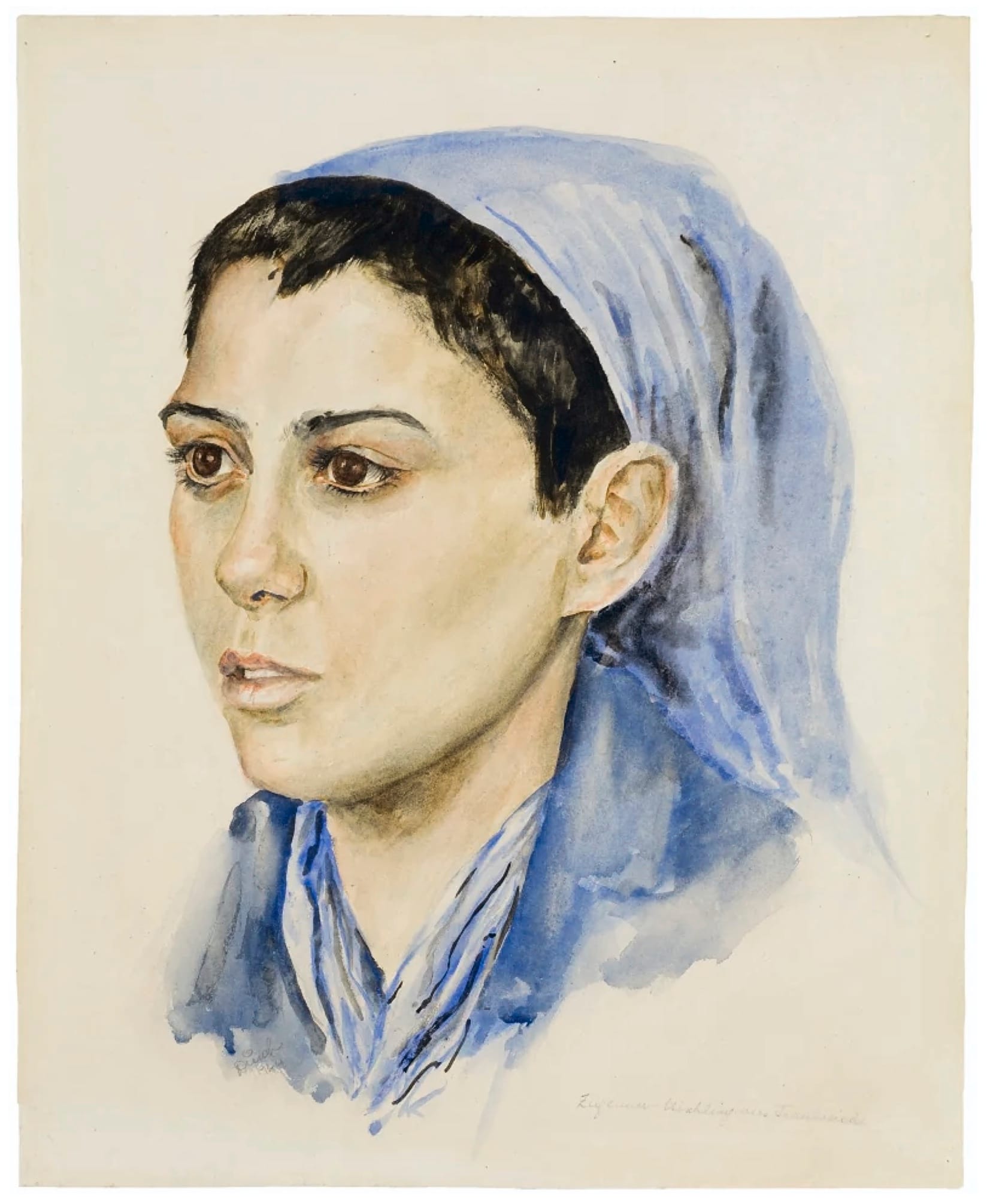
As the legal dispute over the paintings’ ownership continues, no one seems to be asking: What were their names? Who may still be grieving their deaths? What decision would best honor them?
The decades-long ownership dispute between the family of late Holocaust survivor Dina Gottliebova Babbitt and the Auschwitz-Birkenau State Museum over seven watercolors depicting Roma prisoners is back in the news. That's because the dispute culminated in a California lawsuit initiated by her daughters 17 years after their mother's death.
Nicknamed the “Angel of Death,” Dr. Josef Mengele ordered Babbitt to portray the traits of Roma prisoners as part of his pseudo-scientific experiments to prove what he perceived as their racial inferiority. Under these extreme life-and-death circumstances, Babbitt created the watercolors to save her life as well as her mother's. All the Roma people forced to pose for these portraits were later executed.
The news coverage and conversations around the ownership dispute have long missed an essential frame through which to view this tragedy: the rights and dignity of the Roma people who were depicted, killed, and forgotten. What decision would best honor them? How do we stop the harmful experiment's long-term impact from further stigmatizing Roma identity?